the look | article 2
Another way to see wine
- 30.5.2019
- Complementary views
Follow the guide, head for Bordeaux! From small decorative details to vast monuments, from narrow paved streets to lush gardens, wine is omnipresent in Bordeaux and has a story to tell. With so much to see, we recommend a tour taking in the tell-tale signs of wine culture and trading that have run through the city over centuries past.
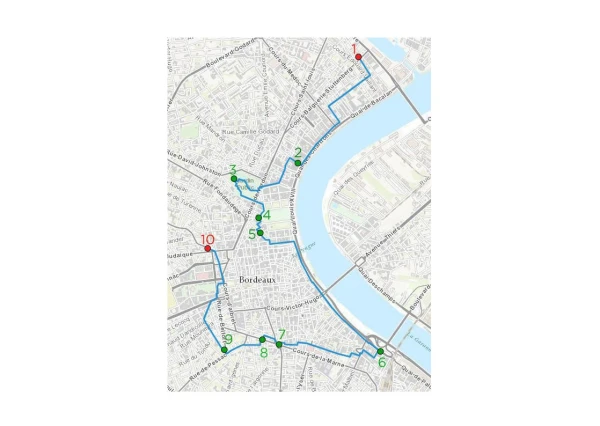
Bas-reliefs adorning facades, fountains and ‘mascaron’ masks above doorways and windows, and fountains too; the architectural details that pepper the city provide a constant reminder of wine, and the prosperous Bordeaux wine trade. Grape bunches and vines intertwine with real or mythological figures who have all played their part in creating the great majesty of Bordeaux. The great viticultural benefactors rub shoulders with Bacchus, the god of wine, but also Mercury and Neptune, deities of commerce, and fresh water and sea respectively.
On foot, by bike or even tram, keep your eyes peeled and follow our wine route through the streets of Bordeaux’s ‘Port de la Lune’, the so-called harbour of the moon.
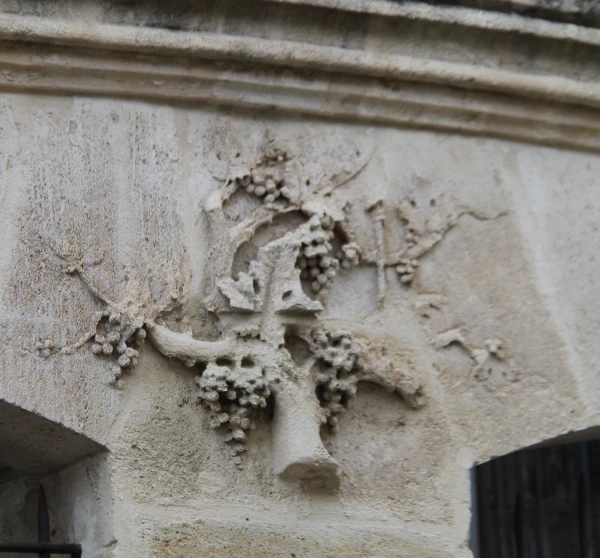
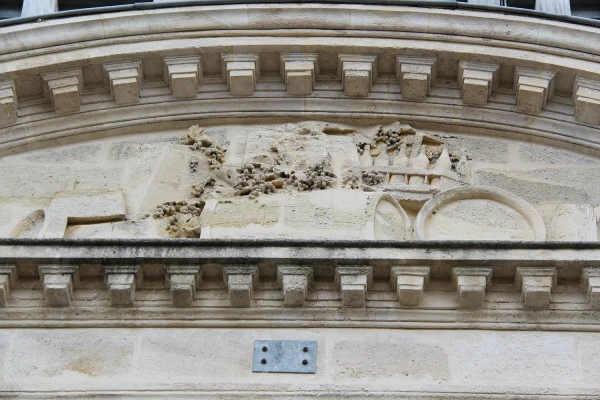
1- Meeting point Rue Bourbon, where on the preserved facade of an ancient building, the vines and barrel sculpted in the stone are sure signs of its previous life as a wine negociants. The entire Chartrons district was shaped by and for trading, with magnificent ornate facades masking a succession of immense buildings assigned for storing wine. With their wide doorways, wine barrels could be rolled as far as the quayside.
17 rue Bourbon
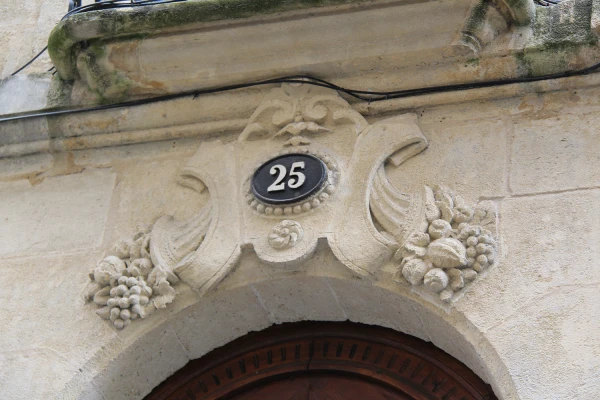
2- Continuing along the Quays towards the city centre, a number of ornately decorated buildings depict a vibrant wine trade associated with the port. Cour Xavier Ornoxan and Cours du Medoc, both iconic addresses known as the ‘cork aristocracy’, reveal impressive iron work and bas-reliefs in a classic style. But it’s worth spending some time winding through the narrow streets, in rue Raze for example, where a wooden door catches our eye. Particularly noteworthy for its design depicting bunches of grapes, it clearly shows that ornate design was not the preserve of the majestic buildings on the quays and imposing avenues.
25 rue Raze
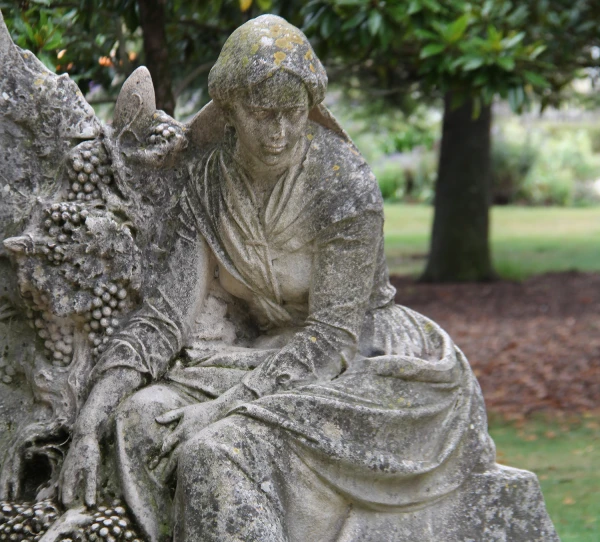
3- A quick detour through the public gardens, where a serious of learned scholars dominate the walkways alongside the museum. The bust of Ulysse Gayon pays tribute to “the founder of Bordeaux winemaking and instigator of the struggle to fight mildew,” as engraved on the pedestal. Alexis Millardet is represented with an allegory to the vine symbolising ‘grateful viticulture’ for this botanist who was instrumental in developing vines resistant to phylloxera, and perfected the famed ‘Bordeaux mixture’, a fungicide used to treat disease in the vineyards.
In the public gardens, to the right of the museum (bust of Ulysse Gayon next to the museum, bust of A Millardet is 5m away along the pathway facing away from the museum.
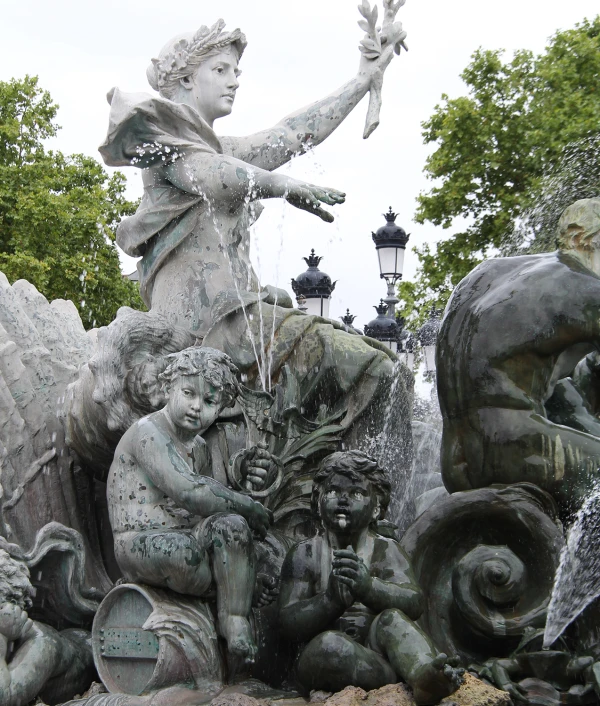
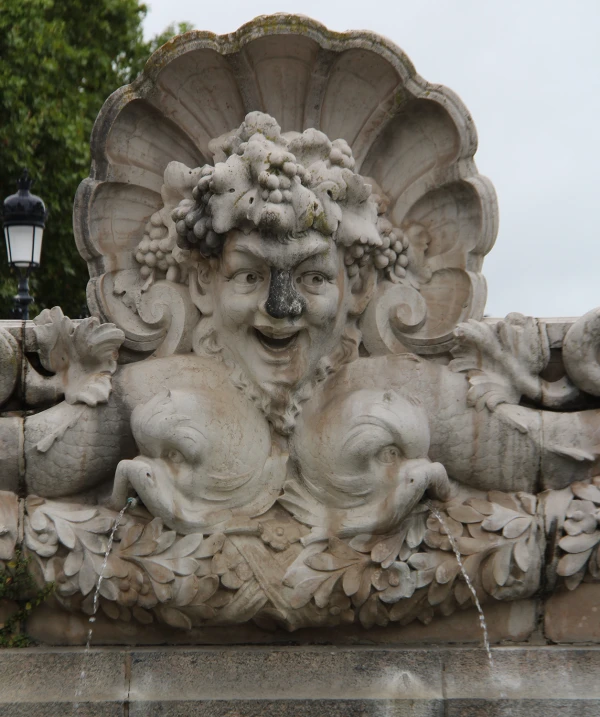
4- In the nearby Place des Quinconces, the fountain is the dominant feature, where a laughing Bacchus sculpted in the stone is clearly visible. On the opposite side, an immense bronze statue depicts a woman holding a bunch of grapes and three children resembling angels, one of whom sitting on a wine barrel. The statue symbolises prosperity and succession from one generation to the next.
Place des Quinconces
(Bacchus is located to the left, on the side of the city centre, woman and angels on the opposite side.)
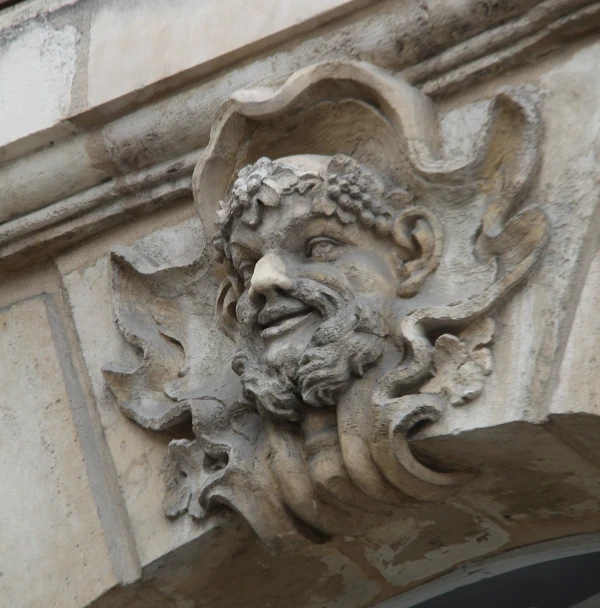
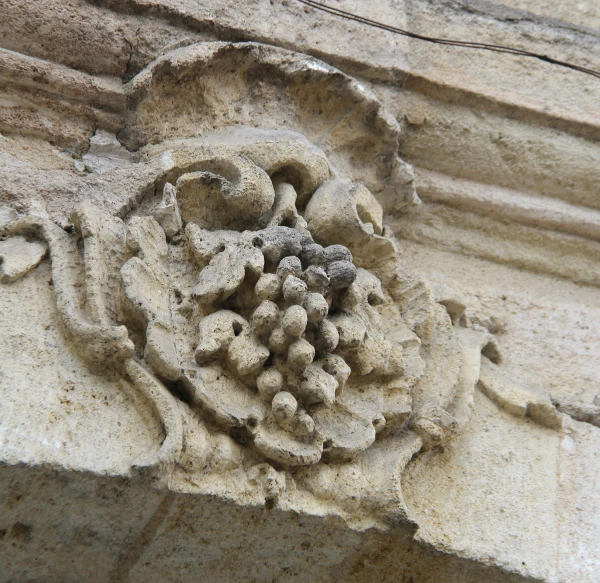
5- The walk continues towards Allées de Tourny, Place de la Comedie, then Place de la Bourse. Images of Bacchus and grape bunches embellish the windows of many of the 18th century edifices which have shaped Bordeaux’s identity. The city features more than 3,000 of these ‘mascoron’ figures, bringing a touch of humour to the rigour of these facades.
26 et 28 Allées de Tourny; Place de la Bourse
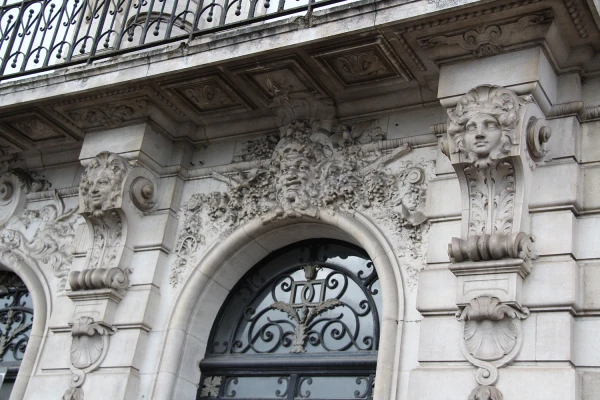
6- Further still, on the Quay de Paludate, Chateau Descas, dating back to the end of the 19th century, proudly showcases the burgeoning work of its founder, in neo-baroque style. The splendour of the facade was a true showcase for this 10,000m2 architectural expanse dedicated to bulk wine brokerage. Less prestigious than its neighbours on the Quay des Chartrons devoted to Grand Cru wines, this trading activity needed to make its presence felt!
3 quai de Paludate
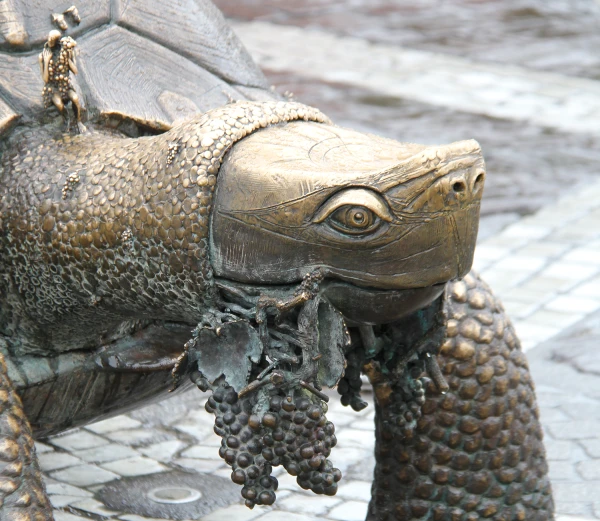
7- Place de la Victoire, the two bronze turtle statues bearing a bunch of grapes are a much more recent nod to its rich history as they were commissioned by the city of Bordeaux in 2005 and the work of Czech artist Ivan Theimer. The names of different Bordeaux appellations appear on the shells. The sculptures stand beneath a marble obelisk symbolising the vine and decorated with symbols celebrating the history of wine and its vineyards. They stand next to a vine thought to have been planted during the French revolution and carefully tended for more than 200 years. The oldest vine growing in the city, it produces several bottles of wine every year.
Place de la Victoire
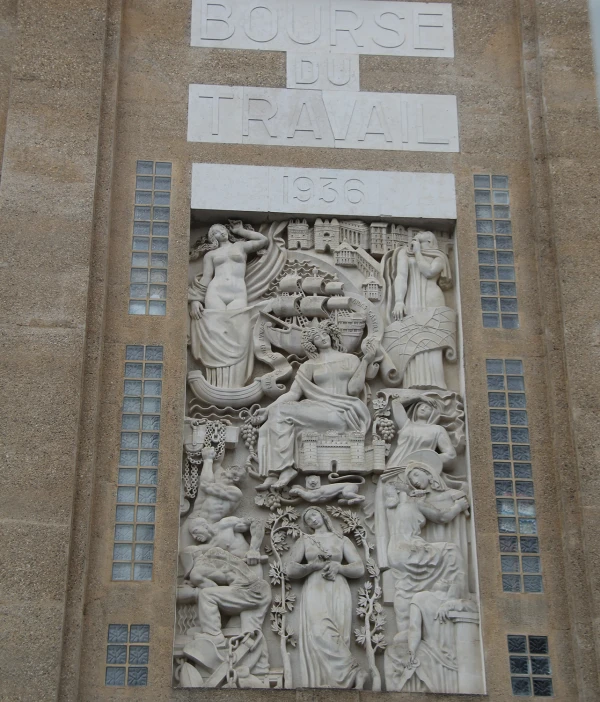
8- In the same district, la Bourse du Travail founded in 1935 was the unions’ headquarters. On its fascia it presents the various activities instrumental to Bordeaux’s great prosperity. The vast bas-relief created by Alfred Sanniot, one of the greatest architectural sculptors of the between-the-wars period, showcases vine cultivation and wine shipping.
44 cours Aristide Briand
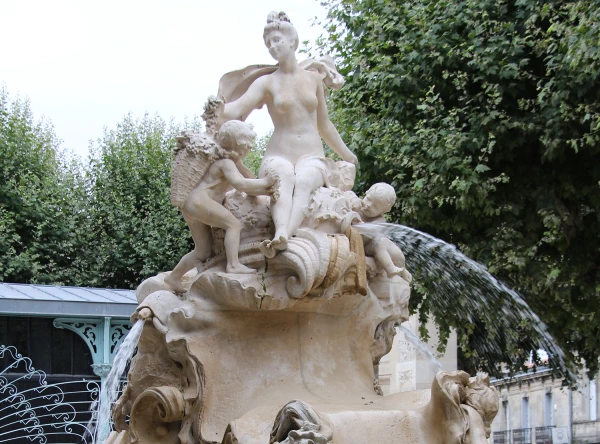
9- Just a stone’s throw away, the ‘Burdigala’ water fountain, the latin name for Bordeaux, appears like a shining light in the Place Amédée Larrieu. The unsung masterpiece of sculptor Raoul Verlet dates back to 1901 and is replete with detail. The centrepiece features a nymph, symbolising the city of Bordeaux, surrounded by cherubs bearing a grape harvesting carrier. On the other side, a boat and other wine-related emblems, a tribute to Bordeaux’s commerce and maritime past.
Place Amédée Larrieu
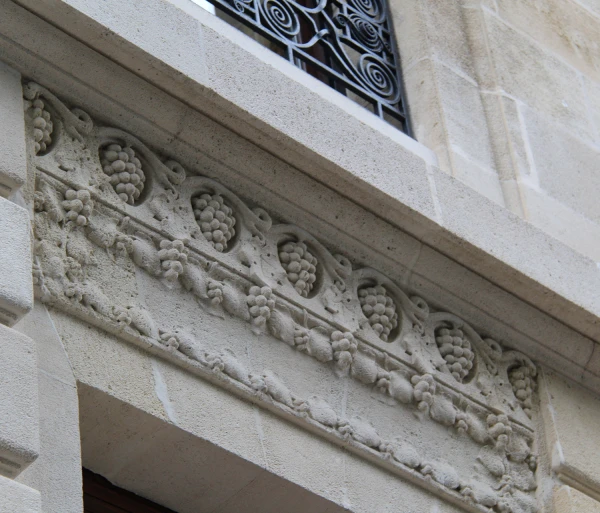
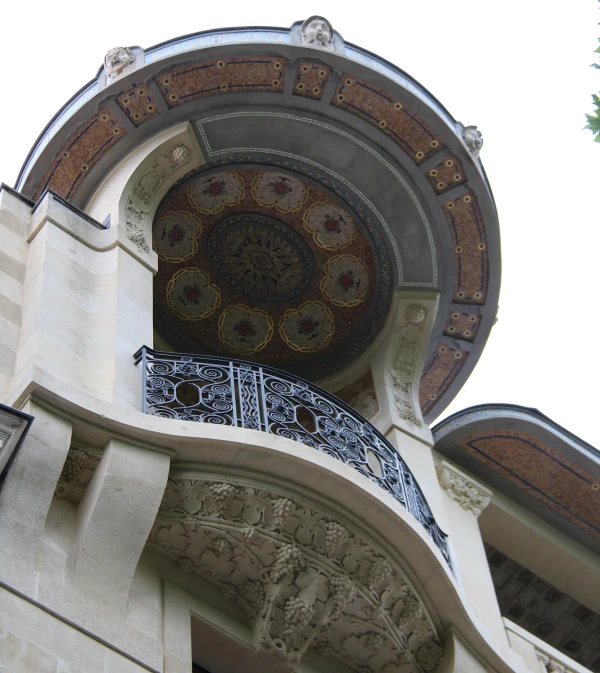
10- The walk ends near the Saint-Seurin Basilica, which was built upon an ancient necropolis located above a vineyard. At Place de Martyrs de la Resistance, entrepreneur Henry Fruges commissioned architect Pierre Ferret to build this private residence. These two Bordeaux figures from the turn of the 20th century, both with a keen interest in natural sciences, celebrated the Bordeaux vineyard on the facade of this splendid building, which the owner imagined as a ‘miniature museum of arts and techniques from the turn of the century.’ Looking up at this Art Deco splendour, we can admire the balconies and a magnificent sculpted rotunda, revealing a new interpretation of wine symbolism in Bordeaux.
63 de la place de Martyrs de la Résistance
Bordeaux has many other wine symbols featuring in its architecture and decor, the legacy of a city which owes its fame to the surrounding vineyards. Look up when you are wandering through the city to see how Bordeaux pays tribute to Bacchus.
To learn more, we recommend the “A walk exploring the history of wine in the city” available at the Tourist Office.
Follow us
@chateautroplongmondot